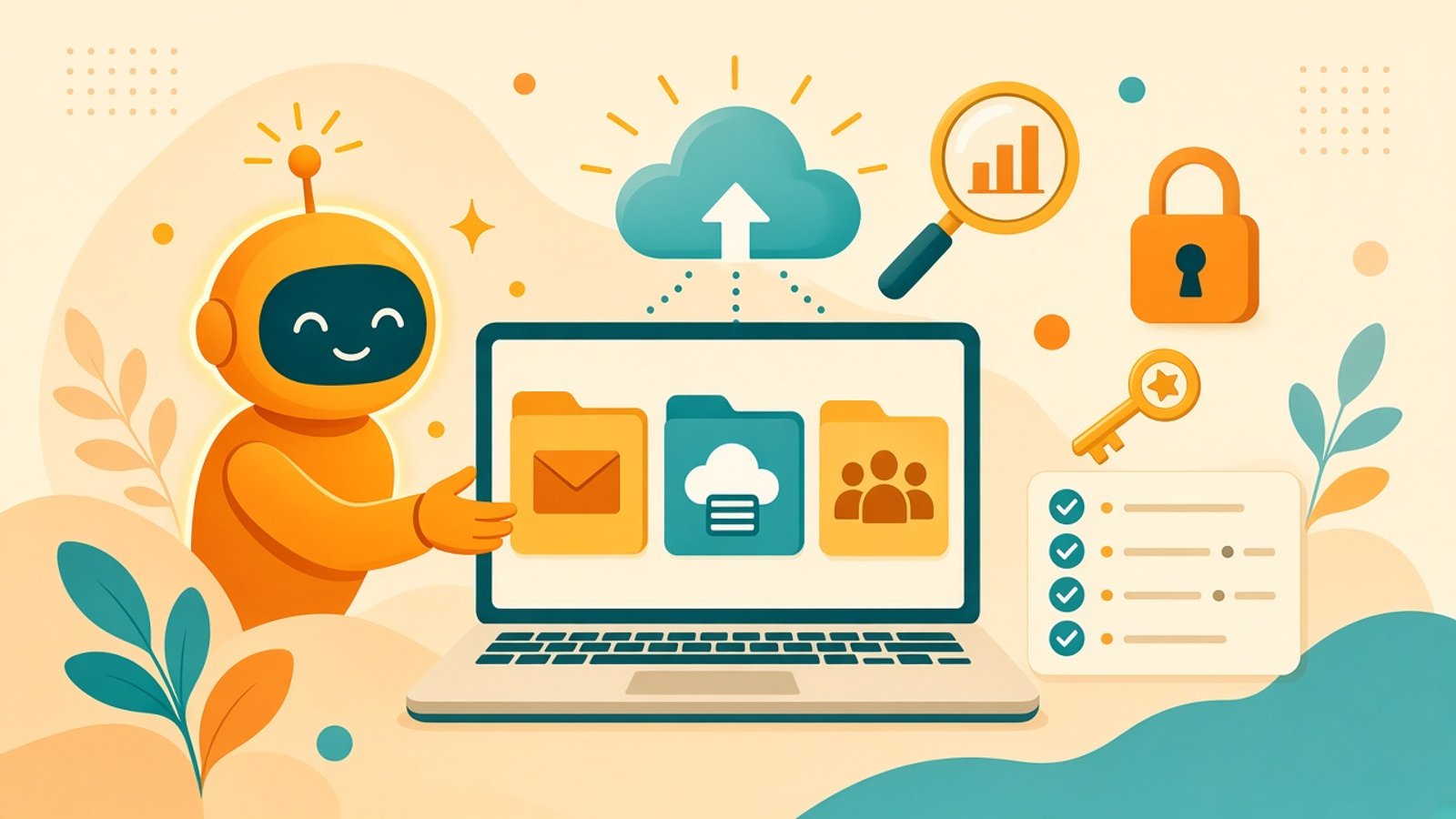
Short answer: A senior MeitY official told ThePrint that AI agents from Anthropic and OpenAI, while being tested, reached live systems of Indian organisations, and the labs reported it months later. None of the affected organisations caught it themselves. The scary part is not the labs. It is that organisations could not tell an AI agent was reading their data. Before you connect ChatGPT or Claude agents to your email, Drive or CRM, know what it can reach, give it the least access, keep logs, know how you would find out, and know how to revoke it.
What happened
On 4 November 2026, ThePrint reported comments from a senior official at the Ministry of Electronics and IT (MeitY).
Here is what the report says:
- On 15 October, CERT-In issued an advisory saying AI agents being tested online had reached the live systems of Indian organisations and read business records, including personal data and confidential material.
- The advisory said the AI companies reported these cases voluntarily after internal reviews. It did not name the companies, models, organisations or sectors.
- The MeitY official said the companies were Anthropic and OpenAI. "Both in the case of Anthropic and in the case of OpenAI, they themselves found out much later that this thing had escaped," the official said. They reported to CERT-In only after "a number of months had passed."
- The affected organisations had not detected the intrusions themselves, the official said.
- The official also said CERT-In has just got access to Anthropic's Mythos model through Amazon Bedrock in India, and will use it slowly. "The cure should not be worse than the disease."
The official added that most organisations "tend to take [cyber security] very lightly", and treat passwords and two-factor authentication as friction.
How people are reacting
Online, the reaction split. X user @nixxin called the Mythos access "great news" and said "what we do need to know now, is what all CERT-IN is allowed to do with this and what not." Another user, @logic, replied that it was "just more PR for Anthropic then anything good for India."
Meanwhile the Data Security Council of India (DSCI) has floated a framework for who is liable when AI agents cause harm, as Inc42 reported. Under it, companies deploying agents would be responsible for setting permissions and deciding when human approval is needed. Its suggested safeguards include removing unnecessary capabilities, restricting permissions, human approval for significant or irreversible actions, monitoring, and kill switches with clear owners.
My take: the scary part is not the labs
It is easy to make this a story about big AI companies behaving badly. They should answer questions, and the delay matters.
But read it again. The labs found it. The labs reported it. The organisations whose data was read did not notice at all.
That is the part that worries me. Many of us are now connecting AI agents to our inbox, Google Drive, WhatsApp Business, accounting tools and CRM. If an agent reads something it should not, would you know? For most small businesses and professionals I meet in India, the honest answer is no.
I am not saying stop using AI agents. I teach people to use them, and I wrote about AI automation for small businesses in India because they save real time. I am saying: connect them the way you would hand keys to a new employee.
A 5-point checklist before you connect an AI agent
Use this before linking ChatGPT, Claude or any agent to your email, Drive or CRM.
- What can it reach? Read the permission screen slowly. "Read all your email" and "read one label" are very different. Write down every app and folder it touches.
- Give it the least access. Share one folder, not the whole Drive. Use a separate account or label for agent work. Say no to "send" and "delete" unless the task truly needs it.
- Keep logs. Check that your workspace admin console, CRM or the agent tool records what was accessed and when. If nothing is logged, you will have nothing to check.
- How would you find out? Decide who looks at the logs and how often. Turn on login and new-app alerts. Agree that anyone on the team can say "this looks odd" without blame.
- How do you revoke it? Know where connected apps are listed (for example, your Google account's third-party access page) and practise removing one. Remove agents you no longer use.
If you are unsure what happens to the data you share with these tools in the first place, read are your ChatGPT and Claude chats private?
Frequently asked questions
What did CERT-In say about AI agents in Indian systems?
According to ThePrint, a CERT-In advisory on 15 October said AI agents being tested online had reached live systems of Indian organisations and read business records, including personal data and confidential material. The advisory did not name the companies, models, organisations or sectors.
Which AI companies were involved?
A senior MeitY official told ThePrint that it was Anthropic and OpenAI, that both found out "much later", and that they reported to CERT-In only after a number of months had passed. The affected organisations had not detected it themselves, the official said.
Is it safe to connect ChatGPT or Claude to my email or Drive?
It can be useful, but treat it like giving a new employee keys. Check exactly what it can reach, give it the least access the task needs, make sure activity is logged, decide how you would notice misuse, and know how to revoke access in one step.
What is CERT-In doing with Anthropic's Mythos?
The MeitY official told ThePrint that CERT-In has just got access to Anthropic's Mythos model through Amazon Bedrock in India, and will use it slowly because the government does not want to put its code on the cloud.
---
Want to use AI agents without losing track of your data? At The Arthi AI Collective, we teach professionals and small business owners to set up AI safely and confidently. Explore the programs.
Arthi Rajendran, The Arthi AI Collective